
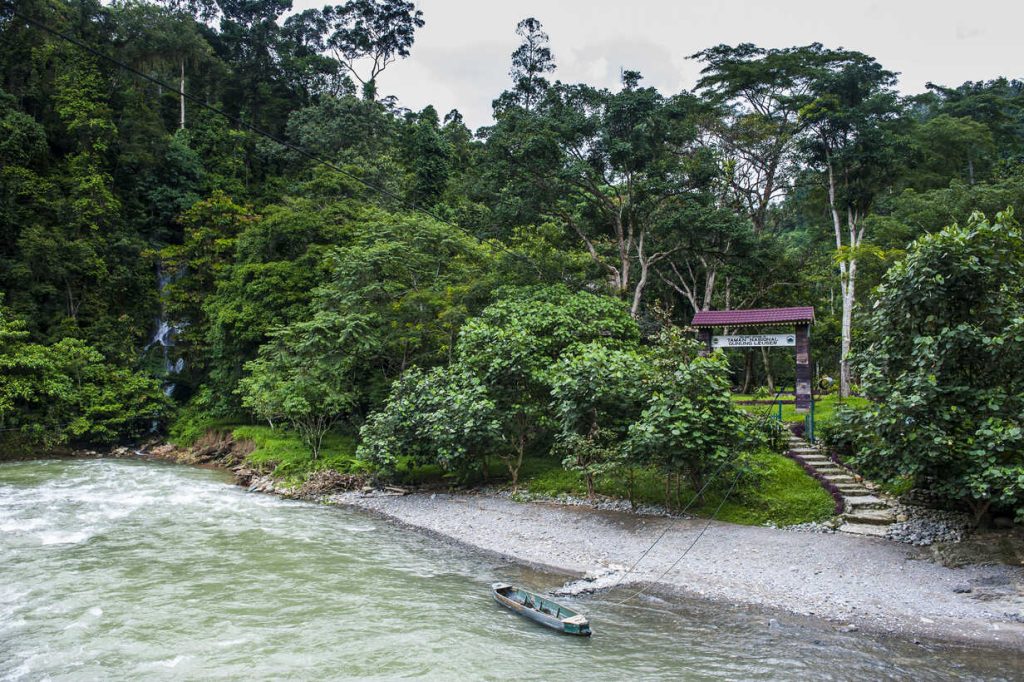
The story began in 1973, when two Swiss zoologist, Regina Frey and Monica Borner, arrived in the remote reaches of the Bohorok district. At the time, the Sumatran Orangutan faced an existential threat from rampant logging and the illegal pet trade.
With the backing of the World Wildlife Fund (WWF) and the Frankfurt Zoological Society, Frey and Borner established a rehabilitation center. Their mission was clear: to take in orphaned or confiscated orangutans, teach them the survival skills they missed from their mothers, and eventually reintroduce them into the wild.
The “Forest School” Era
Throughout the 1970s and 80s, Bohorok became a world-renowned “Forest School”. Young orangutans were trained to climb, forage for fruit, and build sleeping nests.
To monitor their progress, a feeding platform was established. Twice a day, rangers provided supplementary feedings of banana and milk. This platform allowed semi-wild orangutan-those already living in the jungle but not yet fully independent-to have safety net while they adjusted to their natural habitat.
The Shift to Ecotourism and Closure (2002)
As Bukit Lawang fame grew, so did the number of visitors. By the late 1990s, the center faced a difficult paradox: the very people who came to admire the orangutans were inadvertently putting them at risk.
Human contact brought two major threats:
- Disease Transmission: Orangutans share 97% of human DNA, making them highly susceptible to human illnesses like the common cold or tuberculosis.
- Habituation: Constant human presence made orangutans too comfortable with people, hindering their ability to live truly wild lives.
In 2002, the Indonesian government officially closed the center to new arrivals.
Bukit Lawang Today
Today, the center no longer operates as a rehabilitation clinic, but its legacy lives on. The area is now a protected observation site. The descendants of those original rescued orangutans now roam freely in the Gunung Leuser National Park, forming a stable, semi-wild population.
Visitors today don’t go to a “zoo”, but rather trek into the rainforest for a glimpse of these “People of The Forest” in their natural home-a testament to the success of a project that started with two Swiss women and a dream over 50 years ago