
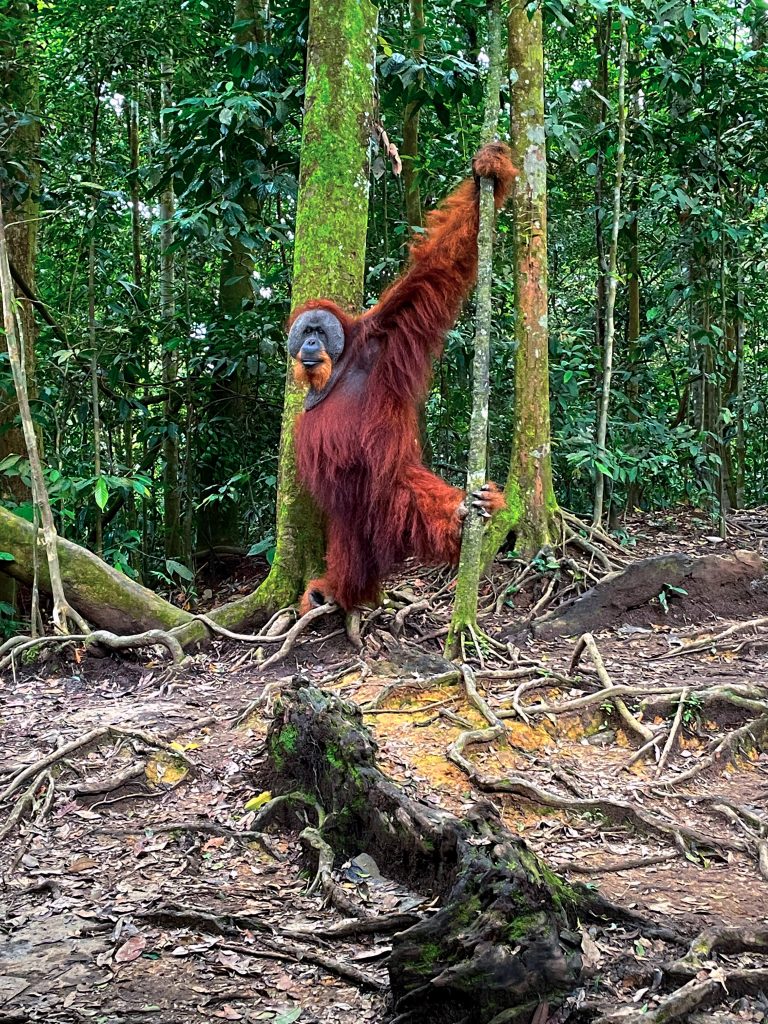
Nestled on the eastern edge of the vast Gunung Leuser National Park in North Sumatra, Bukit Lawang is a gateway to one of the most biodiverse regions on the planet. This small village has gained international recognition for its pivotal role in the rehabilitation of Sumatran orangutans and as a premier destination for ecotourism. The intertwining history of conservation efforts and sustainable tourism in Bukit Lawang offers a compelling narrative of how humans and nature can coexist harmoniously.
The Plight of the Sumatran Orangutan
The Sumatran orangutan (Pongo abelii) is one of the world’s most endangered great ape species. Native exclusively to the northern parts of Sumatra, these intelligent primates have faced severe threats due to deforestation, illegal logging, poaching, and the expansion of palm oil plantations. Habitat loss has led to a drastic decline in their population, making conservation efforts critical for their survival.
The Birth of the Rehabilitation Center
In 1973, the Bukit Lawang Rehabilitation Center was established by two Swiss zoologists, Regina Frey and Monica Boerner, under the umbrella of the Frankfurt Zoological Society. The primary goal was to rescue orangutans that had been displaced, orphaned, or held captive illegally, and to prepare them for reintroduction into the wild.
The center provided:
- Medical Care: Treating injuries and illnesses resulting from captivity or displacement.
- Rehabilitation Training: Teaching essential survival skills such as foraging, nest building, and social interaction.
- Gradual Reintroduction: Carefully releasing rehabilitated orangutans into the surrounding rainforest.
Over the years, the center successfully rehabilitated numerous orangutans, contributing significantly to the conservation of the species.
Challenges and Adaptations
The rehabilitation process was not without challenges:
- Human Interaction: Frequent contact with humans during rehabilitation led some orangutans to become habituated, affecting their ability to survive independently.
- Disease Transmission: Close proximity increased the risk of transmitting diseases between humans and orangutans.
- Illegal Feeding: Some visitors fed orangutans, disrupting their natural foraging behaviors.
In response, stricter guidelines were implemented:
- Minimizing Human Contact: Reducing direct interaction to encourage natural behaviors.
- Visitor Education: Informing tourists about the importance of observing from a distance and not feeding wildlife.
- Controlled Access: Limiting the number of visitors and employing trained guides to enforce regulations.
Transition to Ecotourism
As awareness of Bukit Lawang grew, so did the influx of visitors eager to see orangutans in their natural habitat. Recognizing the potential for sustainable development, the focus gradually shifted from rehabilitation to ecotourism and conservation education.
Key developments included:
- Official Closure of the Rehabilitation Center: In 1995, the Indonesian government officially closed the rehabilitation center, transitioning efforts toward in-situ conservation and wild orangutan monitoring.
- Community Involvement: Local residents began participating in tourism services as guides, lodge owners, and conservationists.
- Ecotourism Guidelines: Establishing protocols to ensure tourism activities were sustainable and did not harm the environment or wildlife.
The Impact of Ecotourism in Bukit Lawang
Ecotourism has become a vital component of Bukit Lawang’s economy and conservation strategy.
Benefits Include:
- Economic Opportunities: Providing livelihoods for the local community through jobs in guiding, hospitality, and services.
- Conservation Awareness: Educating visitors about the importance of protecting orangutans and their habitat.
- Funding Conservation: Tourism revenues contribute to conservation projects and park management.
Challenges Remain:
- Environmental Impact: Ensuring that increased tourist activity does not negatively affect the ecosystem.
- Ethical Practices: Continuously promoting responsible tourism to prevent disturbances to wildlife.
Attractions and Activities in Bukit Lawang
1. Jungle Trekking
The most popular activity, jungle treks range from half-day excursions to multi-day adventures. Guided by experienced locals, trekkers can expect to:
- Spot Orangutans: Observe semi-wild and wild orangutans in their natural environment.
- Encounter Diverse Wildlife: See Thomas’s leaf monkeys, macaques, gibbons, hornbills, and more.
- Explore the Rainforest: Learn about the rich flora and fauna of the Gunung Leuser National Park.
2. River Tubing
A refreshing way to experience the Bohorok River, river tubing offers:
- Scenic Views: Float through the lush jungle landscapes.
- Relaxation and Adventure: Enjoy gentle rapids and calm waters.
3. Village Tours
Immerse yourself in local culture by:
- Visiting Local Markets: Purchase handmade crafts and taste traditional foods.
- Participating in Cultural Activities: Experience traditional music, dance, and customs of the Karo Batak people.
4. Bat Cave Exploration
Discover the mysterious bat caves located a short distance from the village:
- Unique Wildlife: Observe various bat species in their natural roosts.
- Geological Formations: Marvel at impressive stalactites and stalagmites.
Conservation Efforts Today
Conservation remains at the heart of Bukit Lawang’s identity. Ongoing initiatives include:
- Community Education: Programs aimed at teaching locals about sustainable practices and the importance of conservation.
- Reforestation Projects: Planting native trees to restore damaged areas of the rainforest.
- Wildlife Monitoring: Research and monitoring of orangutan populations and other species.
Tips for Responsible Tourism
Visitors can contribute positively by:
- Using Licensed Guides: Ensure your guide is certified and follows ethical guidelines.
- Keeping a Safe Distance: Maintain at least 10 meters from orangutans to avoid disturbing them.
- Not Feeding Wildlife: Feeding animals can disrupt their natural behaviors and diets.
- Avoiding Littering: Carry out all trash to keep the environment pristine.
Conclusion
The history of the Sumatran orangutan in Bukit Lawang is a testament to the impact that dedicated conservation efforts and responsible tourism can have on preserving endangered species. From its beginnings as a rehabilitation center to its evolution into an ecotourism hotspot, Bukit Lawang stands as a shining example of how communities can harmoniously balance ecological preservation with sustainable development.
By visiting Bukit Lawang, travelers not only gain unforgettable experiences but also support the ongoing efforts to protect the majestic Sumatran orangutan and their rainforest home. It is a destination where adventure meets purpose, and every step taken in the lush jungle trails contributes to a greater cause.
Plan Your Visit
Embark on a journey to Bukit Lawang and be part of a legacy that makes a real difference. Whether you’re trekking through the rainforest, drifting along the river, or engaging with the local community, your adventure awaits in the heart of Sumatra.ure awaits in the heart of Sumatra.

