
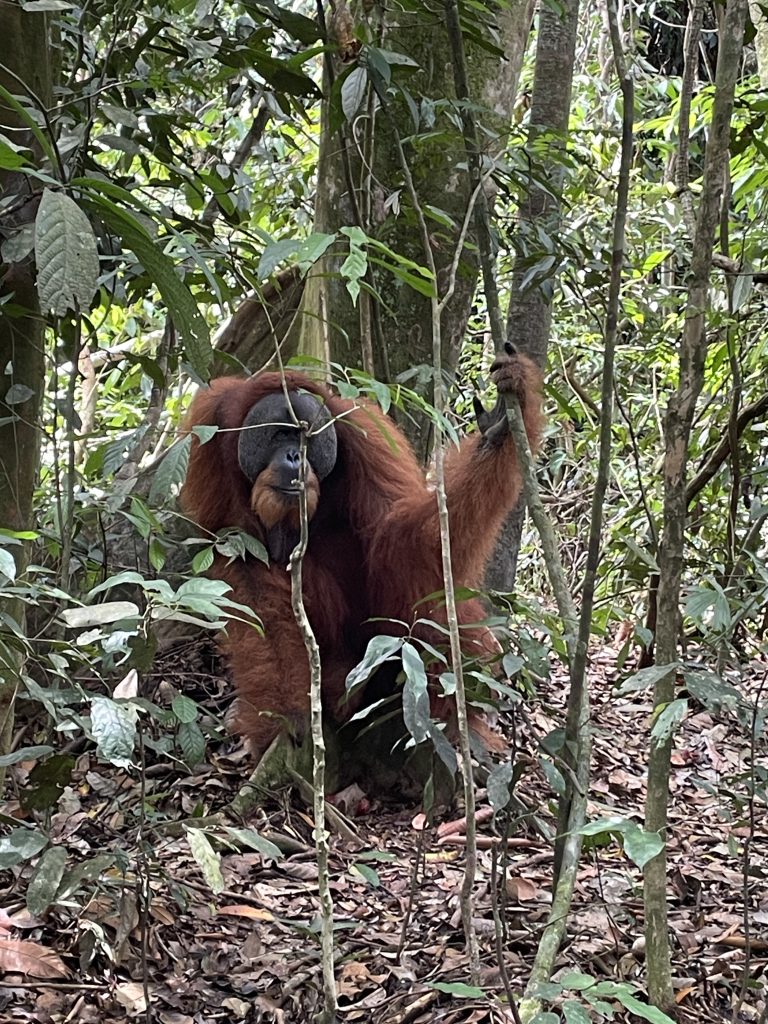
Orangutans, with their distinct red hair and soulful expressions, are one of the most intriguing primates on the planet. Native to the rainforests of Indonesia, these “people of the forest” (as their Malay name suggests) offer a unique insight into the intelligence, social structures, and struggles of one of humanity’s closest relatives. Here are some compelling facts that bring us closer to understanding these fascinating creatures.
A Genetic Bond: Close Relatives of Humans
Orangutans share approximately 97% of their DNA with humans, making them one of our closest living relatives, alongside chimpanzees and gorillas. This close genetic bond is evident in their complex social behavior, problem-solving abilities, and tool use. Their cognitive skills and ability to learn and communicate make them incredibly intelligent beings
Three Species, Unique Characteristics
There are three species of orangutans: the Bornean orangutan (Pongo pygmaeus), the Sumatran orangutan (Pongo abelii), and the Tapanuli orangutan (Pongo tapanuliensis). Each species has adapted uniquely to its environment. The Bornean orangutan, found only on the island of Borneo, is generally larger and has a darker coat. The Sumatran orangutan, on the island of Sumatra, has a lighter, more orange-colored coat. The Tapanuli orangutan, also on Sumatra but discovered only in 2017, is the rarest of the three and has distinct physical and genetic differences.
Living a Solitary Lifestyle
Unlike other great apes, orangutans are relatively solitary creatures. They often live alone or in small family groups, especially females with their offspring. Males are typically solitary except during mating, and their large home ranges only intersect occasionally with others. This behavior is partly due to the scarcity of food in the dense rainforests, as solitary life reduces competition for resources.
Masters of the Forest Canopy
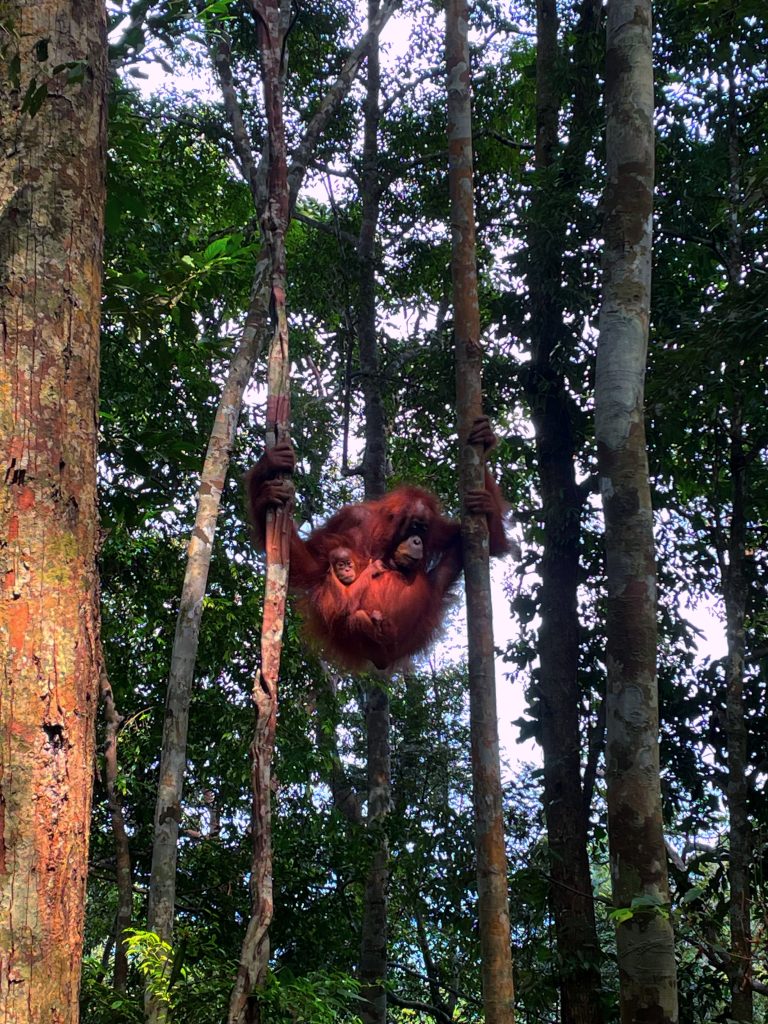
Orangutans are tree-dwelling experts, spending almost their entire lives in the forest canopy. They use their long arms, which can span up to 7 feet (2.1 meters), to swing from branch to branch with incredible ease and agility. Their arboreal lifestyle allows them to find fruit and avoid ground-level dangers like tigers and other predators. At night, they build nests from branches and leaves high in the trees to sleep safely.

Remarkable Lifespan and Slow Reproduction
Orangutans have a long lifespan, with many individuals living well into their 50s in captivity, though their lifespan in the wild is typically shorter due to environmental threats. However, they have one of the slowest reproductive rates of any mammal. Female orangutans give birth only once every 6-8 years, as the young are highly dependent on their mothers for survival and social learning
A Diet Rich in Fruits and Creativity
Orangutans have a diverse diet that mainly consists of fruit, particularly their favorite, durian, a spiky fruit with a strong smell. They also consume leaves, bark, insects, and occasionally, small vertebrates. Their keen sense of smell and remarkable memory help them locate fruiting trees across vast areas of the forest. Furthermore, they are known to use leaves as umbrellas to shield themselves from rain, showing resourcefulness in their everyday lives.
Endangered by Deforestation and the Palm Oil Industry
All three species of orangutans are critically endangered, primarily due to habitat loss from logging, mining, and the expansion of palm oil plantations. The vast tracts of forest cleared for these industries have severely fragmented their habitat, making it harder for them to find food and mates. Additionally, illegal hunting and poaching pose significant threats. Conservation efforts are crucial in preventing these remarkable animals from becoming extinct.
Tool Use and Cultural Behaviors
Orangutans are skilled tool users, a trait once believed unique to humans. They use sticks to extract insects from tree bark and leaves to gather water. Research has also shown evidence of cultural behaviors that vary from one population to another, suggesting that they pass down knowledge through generations, much like human societies.
The Future of Orangutans: Protecting a Primate Icon
Efforts to save orangutans from extinction are ongoing, with initiatives including habitat restoration, anti-poaching measures, and awareness campaigns around the use of sustainable palm oil. Zoos and rescue centers around the world are also working to rehabilitate and release orphaned orangutans into the wild. By understanding and appreciating the incredible lives of these great apes, we can be inspired to support and protect them, ensuring they remain in our world for generations to come.
